- CDCP Accepted
- Wed-Sat: 9am-7pm
- Now Accepting New Patients
- Direct-Insurance Billing
- (289) 276-8542
- 1055 Canadian Pl #109, Mississauga, ON L4W 0C2

A crown is a cap that fits over a damaged tooth, restoring its shape, strength, and appearance. It protects what's left of the natural tooth while letting it function completely normally. Crowns are also placed after root canal treatment to protect the treated tooth from fracturing over time.
A bridge fills a gap created by one or more missing teeth. It consists of a false tooth held in place by crowns on the neighbouring teeth. The result is a fixed, natural-looking restoration that doesn't come in and out like a partial denture. Most crowns and bridges at our Mississauga clinic are made from porcelain or ceramic, designed to blend with your natural teeth
There are several situations where a crown or bridge is the most sensible solution. If you're unsure whether your tooth needs a filling or something more, a quick exam at our Mississauga clinic will give you a clear answer.
A crack that goes deep enough can't be held together by a filling. A crown seals and protects it.
When decay takes up too much of a tooth for a filling to work, a crown is what holds everything together.
Teeth treated with root canals become more brittle over time. A crown protects them from cracking.
A bridge replaces one or more missing teeth without surgery, using nearby teeth as anchors for a fixed result.
Teeth ground down from bruxism or acid erosion can be built back up with crowns to restore proper function.
Badly shaped or discoloured teeth can be covered with a crown. For purely cosmetic improvements on healthy teeth, veneers may be a better fit.
Real results from our patients. Every case is unique — your dentist will discuss what results you can expect based on your specific situation.
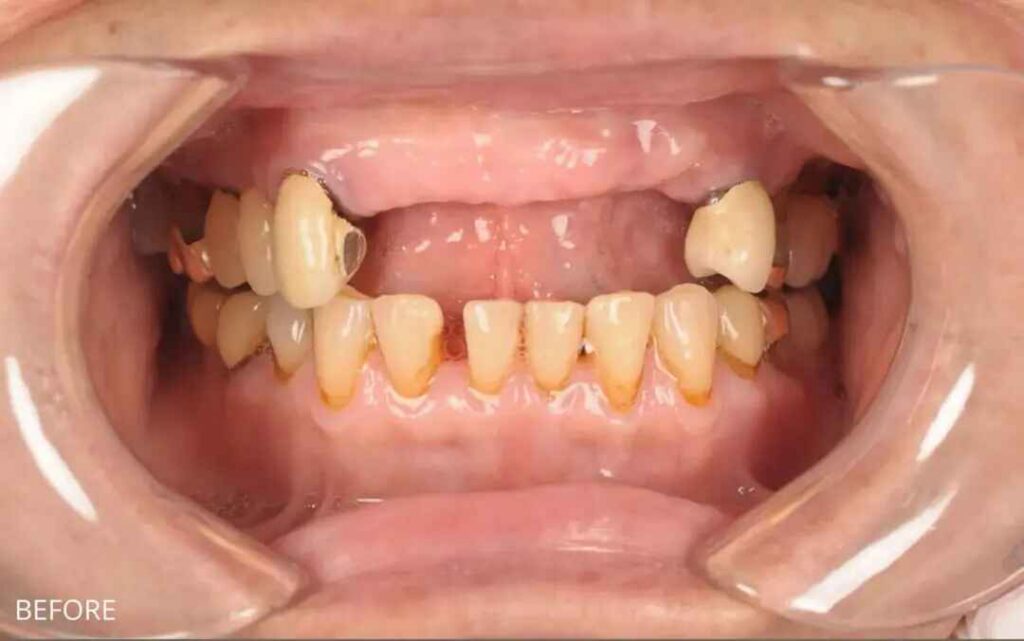
BEFORE
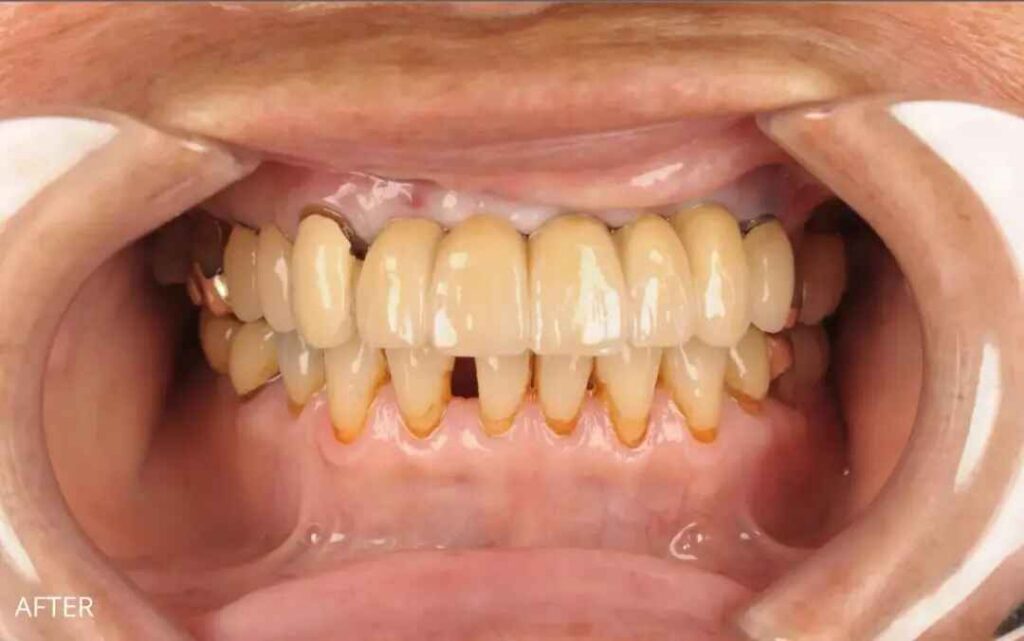
AFTER
A tooth-coloured composite filling restores the treated tooth and blends with the surrounding tooth structure. Individual results vary.
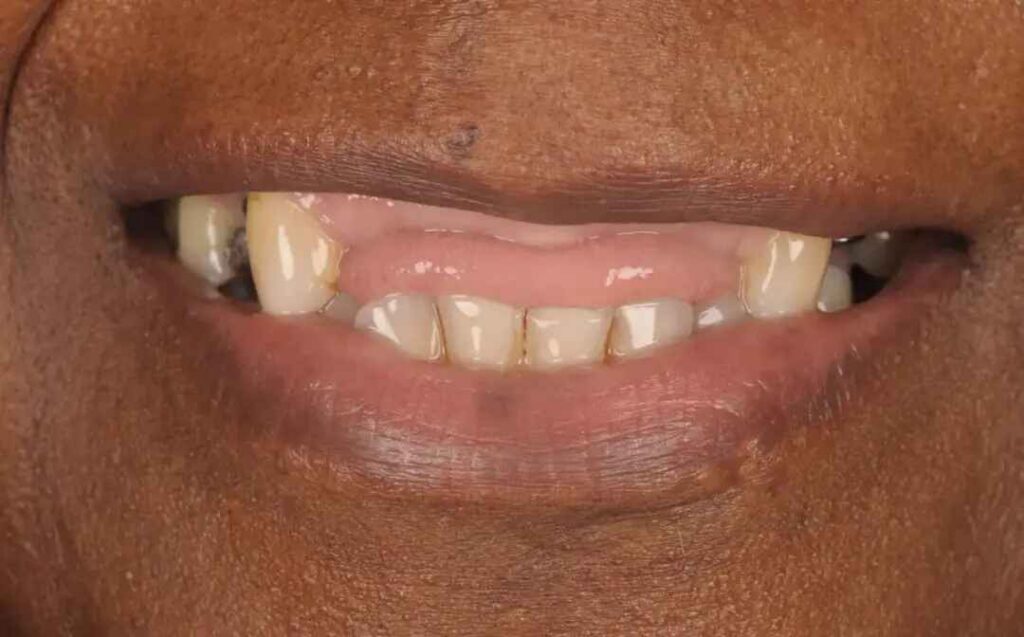
BEFORE
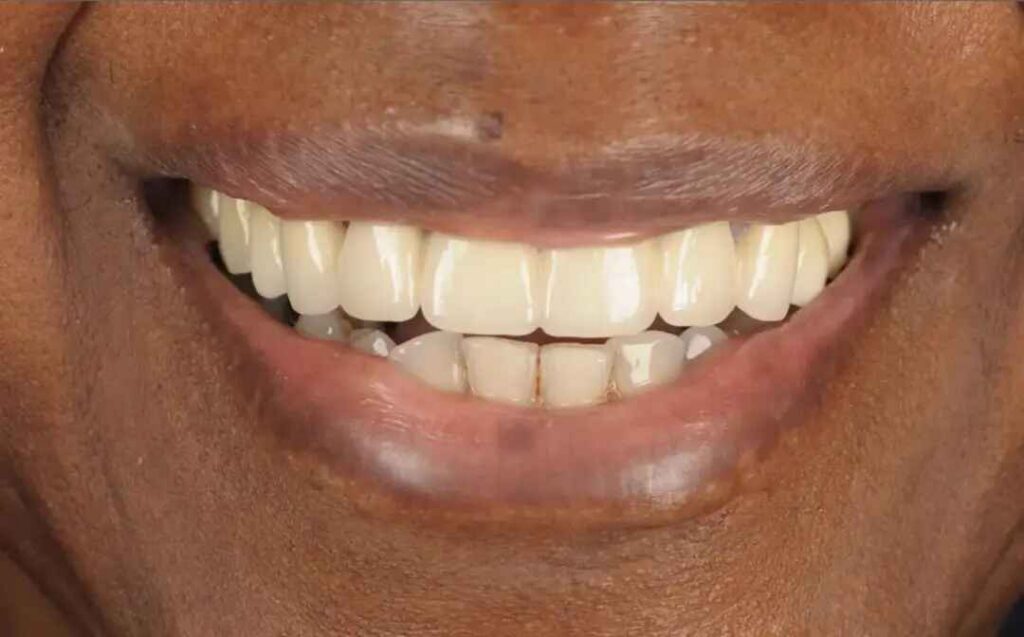
AFTER
Before and after composite bonding to repair a chipped upper front tooth. Tooth-coloured resin restores the missing edge, creating a more even shape that blends with the surrounding teeth.
From consultation to final fitting — here is what happens at each stage.
Your dentist examines the gap, takes X-rays and assesses the surrounding teeth and jawbone. All bridge options — traditional, cantilever, Maryland and implant-supported — are discussed, along with alternatives such as implants or dentures. A free 15-minute short consultation is available for initial enquiries
Your dentist recommends the most appropriate bridge type based on the position of the gap, the health of the adjacent teeth, your biting forces and your aesthetic goals. A shade guide is used to select the exact colour that matches your surrounding teeth. For implant-supported bridges, a CT scan may be required to plan implant placement.
For traditional and cantilever bridges, the abutment teeth are carefully shaped under local anaesthetic — typically 1.5–2 mm of tooth structure is removed to make space for the supporting crowns. For Maryland bridges, only minimal enamel roughening is needed. For implant-supported bridges, implants are surgically placed into the jawbone at this stage.
Detailed digital or physical impressions of your prepared teeth (or implant positions) are sent to our specialist dental laboratory. A temporary bridge is fitted to protect your teeth and fill the gap while the permanent bridge is being hand-crafted — this typically takes 1–2 weeks for tooth-supported bridges, or 3–6 months for implant-supported bridges (to allow the implants to integrate with the bone).
Your permanent bridge is tried in for fit, colour and bite. Every contact point and margin is checked to ensure the bridge sits perfectly on the supporting teeth or implants. Once you and your dentist are completely happy, the bridge is permanently cemented or screwed into place.
The bridge is polished to a natural finish, your bite is carefully checked and any final adjustments are made. Your dentist provides detailed aftercare instructions including how to clean underneath the bridge using floss threaders or interdental brushes. With good oral hygiene and regular check-ups, your bridge will last for many years.
Good aftercare is essential to maximise the lifespan of your dental bridge or crown and keep the supporting teeth healthy.
Use a fluoride toothpaste and a soft or medium-bristled brush. Pay attention to the gum line and the area around the filling. Electric toothbrushes are highly effective.
Use a floss threader, superfloss or interdental brush to clean underneath the pontic (false tooth) and along the gum line every day. This removes plaque and food debris that a normal toothbrush cannot reach.
Dental bridges are extremely strong, but avoid biting directly on very hard objects such as ice, hard sweets, bones or using your teeth as tools. This advice applies to natural teeth as well.
If the bridge or crown feels loose, your bite feels different, or you experience sensitivity, contact your dentist promptly. A loose bridge can allow bacteria to enter and cause decay in the abutment teeth.
Teeth grinding (bruxism) can place excessive force on bridges and their supporting teeth. If you clench or grind, a custom night guard protects your bridge while you sleep.
Visit your dentist at least twice a year. They will check the condition, margins and colour of your fillings and recommend polishing, repair or replacement as needed.
Have questions about our dental services? Find answers to common questions below, or contact us directly for more information.