
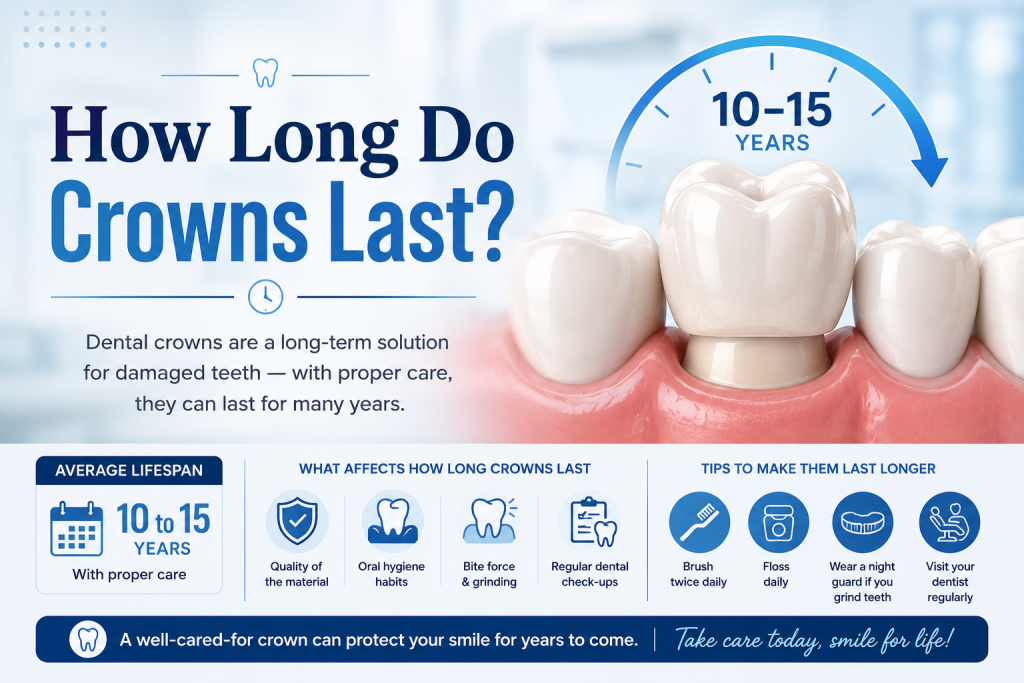
If your dentist has recommended a dental crown, one of the first questions you are likely asking is how long it will actually last. It is a fair question. A crown is a meaningful investment in your oral health, and knowing what to expect helps you plan for the future and take better care of the restoration once it is in place.
The honest answer is that how long do dental crowns last depends on several factors, including the material used, where the crown is placed in your mouth, your bite habits, and how well you maintain your oral hygiene. Most crowns last between 10 and 20 years, but some last much longer, and some fail earlier than expected.
How Long Do Dental Crowns Last on Average?
The general range dentists give for how long does a crown last is 10 to 30 years. That is a wide window, and it exists because crown longevity varies significantly based on the individual patient and the crown itself.
Research published in clinical dental literature supports an average lifespan of 15 years for most crowns under normal conditions. Some well-cared-for crowns on front teeth with light bite forces last 25 years or more, while crowns on back molars that absorb heavy chewing pressure may need replacement sooner. The material a crown is made from is one of the biggest determining factors, so it is worth understanding how each type compares.
Crown Lifespan by Material
| Crown Material | Average Lifespan | Durability | Best For |
|---|---|---|---|
| Zirconia | 20+ years | Excellent | Front and back teeth, metal-free aesthetic |
| Gold / Metal Alloy | 20 to 40+ years | Outstanding | Back molars, heavy grinders |
| Porcelain-Fused-to-Metal | 15 to 20 years | Good | Front and back, some risk of visible metal margin |
| All-Ceramic (e.g. E-max) | 15 to 20 years | Very good | Front teeth, high aesthetics |
| Composite Resin | 5 to 7 years | Moderate | Temporary or lower-cost option |
Porcelain-Fused-to-Metal (PFM) Crowns
Porcelain-fused-to-metal crowns combine a metal substructure for strength with a porcelain outer layer for aesthetics. A well-placed PFM crown typically lasts 15 to 20 years. The limitation is the porcelain layer, which can chip under heavy bite forces, and the metal margin may become visible as the gum line recedes over time.
Zirconia Crowns
Zirconia is currently the preferred material for most patients. It is extremely strong, metal-free, and creates no dark line at the gum margin. Studies show zirconia crowns last 20 or more years in the majority of cases.
Gold and Metal Alloy Crowns
Gold crowns are the most durable option available. They withstand chewing forces extremely well, wear at a rate similar to natural enamel, and very rarely fracture. Studies show gold crowns can last 20 to 40 years or longer. Their limitation is appearance, so they are used almost exclusively on back molars where they are not visible.
Composite Resin Crowns
Composite resin crowns are less common for permanent restorations and are typically used as temporary crowns or where cost is the primary concern. They generally need replacement within 5 to 7 years under normal use.
Does Crown Location Affect Lifespan?
Yes, significantly. Where a crown sits in your mouth directly affects the forces it endures every time you chew.
Front teeth crowns experience lower bite forces, so a well-made zirconia or lithium disilicate crown on a front tooth can last 20 or more years. Back molar crowns absorb the most force of any tooth in your mouth, which is why crown lifespan on back molars is generally shorter than on front teeth, and choosing a more durable material like zirconia or gold for molars is often advisable.
Teeth that have had root canal treatment and have been crowned tend to be more brittle than vital teeth because the nerve and blood supply have been removed. Protecting that tooth from grinding is particularly important.
What Shortens a Crown’s Lifespan?
Bruxism (teeth grinding and clenching). This is one of the most significant factors that shortens crown lifespan. Nighttime grinding generates forces several times greater than normal chewing, and over months and years gradually wears down crown material, chips porcelain, and stresses the cement bond. A custom night guard is the most effective way to protect a crown if you grind.
Poor oral hygiene. The crown itself cannot get a cavity, but the natural tooth structure at and below the gum line still can. If plaque accumulates at the crown margin, bacteria can work their way under the crown and cause decay in the underlying tooth.
Chewing hard foods and objects. Biting down on ice, hard candies, or popcorn kernels applies concentrated force that can crack porcelain and dislodge crowns, particularly all-ceramic crowns.
Poor crown fit at placement. A crown that does not fit precisely at the margins creates micro-gaps where bacteria and food can enter, leading to recurrent decay beneath the crown and eventual failure.
Acid erosion. Frequent consumption of acidic beverages, acid reflux, or dry mouth can gradually erode the cement bond and the crown surface.
Signs Your Crown Needs to Be Replaced
- Pain or sensitivity: A crown that fit comfortably for years and suddenly causes pain to temperature, biting, or pressure may indicate decay beneath it, a cracked underlying tooth, or crown failure
- Visible cracks or chips: Small chips may be cosmetic only, but larger cracks compromise the structural integrity of the crown
- Dark line at the gum margin: On porcelain-fused-to-metal crowns, a grey line appearing at the gum line means the margin may no longer be sealed properly
- Crown feels loose: Any movement in a crown means the cement bond has been compromised and should be seen promptly
- Crown falls out: Keep it safe and contact your dentist the same day rather than leaving the underlying tooth exposed
What to Do If Your Crown Falls Out
A dislodged crown needs attention within 24 to 48 hours. Clean it gently with water without scrubbing. If the underlying tooth is sensitive, temporary dental cement from a pharmacy can seat the crown back in place while you wait for your appointment, though superglue should never be used.
Once you see your dentist, they will assess whether the crown can be recemented or whether the tooth structure beneath it has changed enough to require a new crown. In many cases, if the crown came off cleanly and the underlying tooth is intact, recementation is straightforward.
How to Make Your Crown Last as Long as Possible
Brush twice daily and floss once daily, paying particular attention to the crown margin where it meets the tooth at the gum line. Use a night guard if you grind, which does more to extend crown lifespan than almost any other single step. Avoid hard foods and ice chewing, and attend regular dental cleaning and exam appointments so your dentist can inspect the crown for chips, check the gum line for margin issues, and catch early signs of decay before they progress.
Are Dental Crowns Covered by Insurance?
Most dental insurance plans cover a portion of crown costs, typically around 50% of the fee after the deductible, up to the annual maximum. Coverage is usually subject to a waiting period for major restorative work, commonly 12 months from when the policy started. Most plans allow crown replacement on the same tooth every five to eight years, though a well-fitted crown should not need replacement that frequently. If you are a CDCP member, dental crowns may be covered depending on the clinical situation and the government fee schedule.
Frequently Asked Questions
How long do dental crowns last on average?
Most last between 10 and 20 years with proper care. Zirconia and gold crowns often exceed 20 years. Porcelain-fused-to-metal crowns average 15 to 20 years. The material, location, and patient habits all affect the final lifespan.
How long does a crown last on a front tooth?
Front tooth crowns typically last longer than back tooth crowns because they experience lower bite forces. A well-placed zirconia or all-ceramic crown on a front tooth can last 20 or more years.
Can a dental crown last a lifetime?
Some crowns, particularly gold crowns on back teeth, can last 30 to 40 years or more. Whether a crown lasts a lifetime depends on the material, the quality of placement, your bite forces, and your oral hygiene habits.
How long do a crown last if I grind my teeth?
Grinding significantly shortens crown lifespan. Without protection, a porcelain crown on a grinding patient may need replacement in 7 to 10 years rather than 15 to 20. A night guard is the most effective way to extend crown life for people who grind.
What happens if I do not replace a failed crown?
Leaving a failed or fallen crown untreated exposes the underlying tooth to bacteria, temperature sensitivity, and fracture. The longer a damaged tooth is left uncovered, the more tooth structure is lost.
Summary
How long do crowns last depends on material, location, oral habits, and the quality of fit at placement. Most patients can expect 10 to 20 years from a well-placed crown, with zirconia and gold options frequently lasting longer. The factors you control most directly are oral hygiene, protecting your crown with a night guard if you grind, and attending regular dental checkups so any early issues are caught before they escalate.
If you have questions about an existing crown or need a new one, contact us to book a consultation.